COMMON unit of time
beat
0.864 s
exactly 108/125 of an SI second
- Scale
- 100 beats = 1 millidie
100,000 beats = 1 day - Frequency
- 125/108 Hz ≈ 1.1574 Hz
- Caesium
- 7,942,433,849.28 Cs-133 periods
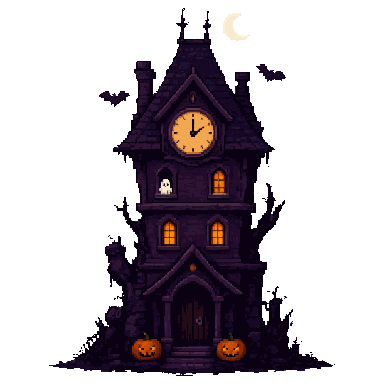
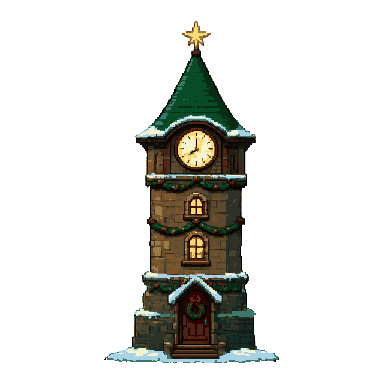
A new measure of everyday
Same planet. A haunted rhythm. Happy Halloween.
Same planet. A quieter rhythm. Merry Christmas.
The world keeps 24 hours and months of uneven length. COMMON is a design study in a calmer grid: thirteen equal months, and one day measured in hundredths, thousandths, and beats. Meet centidies and millidies
01 / The clock
0.0 centidies, or 0 millidies.
Adds two digits for hundredths of a millidie to the live readout and converter. Each step is one beat, exactly 0.864 s. Off by default.
The landing dial is one 100-division scale. Its three main hands are read the way a classic hour hand works: the numeral behind the tip gives the digit.
Together the hands spell 3 · 8 · 7: 387 millidies, or 38.7 centidies. One quantity, two scales. Read the numeral each hand has passed; the fine ticks show progress toward the next digit. There is no seconds hand. The shortest hand also shows how much of the day has passed.
Want a closer look? Turn on Extra precision beneath the landing readout. A thin dashed fourth hand reads hundredths of a millidie from the 100 fine ticks: 3 · 8 · 7 with that hand at tick 77 becomes 38.777 centidies, or 387.77 millidies. Each tick is one beat, exactly 0.864 s; one turn takes 100 beats (86.4 s). With reduced motion enabled, this hand steps between ticks instead of sweeping. The three-hand view is always the default; the switch on this page also adds those two digits to the converter. This is still time of day, not a sports stopwatch or a claim of competition-grade timing accuracy.
02 / The unit
A name for the hundredth of a millidie — and a definition that starts at the caesium atom and ends at the day.
COMMON unit of time
0.864 s
exactly 108/125 of an SI second
Definition
The beat, symbol bt, is the COMMON unit of time. It is defined by taking the fixed numerical value of the caesium frequency ΔνCs, the unperturbed ground-state hyperfine transition frequency of the caesium-133 atom, to be 9,192,631,770 when expressed in the unit Hz, and by fixing the length of the day at 86,400 s. One beat is exactly 1/100,000 of a day, or 108/125 s.
The second is a base unit: the atom defines it. The beat is a derived unit: the day defines it. It is not a whole second — 0.864 s — but the fraction is exact. That is also why one beat is not a whole number of caesium periods. The count is 7,942,433,849.28 — a fraction, not a rounding. Force it to a whole period and the day would stop being 86,400 s. COMMON keeps the day.
The name is a rhythm, not a claim about the heart: 100,000 beats a day is 69.4 beats a minute, close to a resting pulse. On the dial, the fine hand makes one turn per 100 beats, and each tick is one beat.
The beat is not an SI unit and does not replace the second. It is a derived civil unit for the COMMON day, in the same family as the day itself.
The shape of a year
The sun still sets. The seasons still turn. Only the grid changes.
13
Equal months
Four weeks each, Monday through Sunday.
100
Centidies a day
One hundredth of a day. Split it into ten millidies, then each millidie into 100 beats: a hundred thousand equal parts of the whole.
1–2
Days outside the week
Year Day always; Leap Day in leap years.
03 / The calendar
Every month begins on Monday and ends on Sunday. Select a day to see its Gregorian equivalent, its place in the year, and whether it is today.
Selected day
— Today
—
04 / Try another moment
Choose any Gregorian date and time. The converter shows the fixed date and the decimal time at that exact moment.
Interpreting in Local time.
Fixed date
—
—
Centidies
—
—
—
05 / The idea
The International Fixed Calendar is not a new planet. It is a new way to draw the same one.
01
Every month is 28 days: four weeks, Monday to Sunday. There is no 30-versus-31, and no weekday drift from month to month.
02
A day is 100 centidies, 1,000 millidies, or 100,000 beats. The names combine metric prefixes with Latin dies, meaning day; they are coined names, not standard units. One centidies lasts 14 minutes 24 seconds; one millidies lasts 86.4 seconds; one beat lasts exactly 0.864 seconds. Midnight is 0.0 centidies, noon is 50.0, and the last reading is 99.9. We truncate, never round ahead of the dial.
03
One day closes every year; in leap years a second arrives after 28 June. They sit outside the week, so 1 January is always a Monday.
Questions
The short version: the grid is a proposal, the planet is not.
Yes. Local uses the zone your device reports and follows daylight saving. UTC shows the same instant in Coordinated Universal Time. The switch changes the clock, the today card, the calendar marker, and the converter. The calendar's structure itself is zone-independent; only “today” moves.
The day fraction is derived from wall-clock fields, so it behaves like an ordinary local clock across daylight saving. On spring-forward it jumps forward with the local clock; on fall-back it repeats an hour. The centidies scale is not stretched or compressed to smooth out a 23- or 25-hour day. UTC has no daylight saving. Times that do not exist locally are rejected by the converter rather than guessed.
No. The French Republican day of 1793–1805 used decimal hours, minutes, and seconds. COMMON instead measures the fraction of the day directly: hundredths (centidies) and thousandths (millidies). The readout is one quantity at two scales, not three separate time units.
13 × 28 = 364, plus Year Day makes 365; Leap Day makes 366. Every month is identical and every year begins on Monday. The International Fixed Calendar was promoted by Moses Cotsworth and Kodak in the 1920s and 1930s, but never adopted for civil use. This is a design study, not a calendar reform campaign.
The fixed year starts on 1 January and follows the Gregorian day-of-year, so the seasons stay in place. Every date has a Gregorian equivalent; select one in the calendar to see it. Year Day is the final Gregorian day, 31 December. Leap Day is inserted after IFC 28 June and before Sol 1; in the Gregorian calendar it is 17 June in leap years. Both sit outside the weekday cycle, so the 52-week pattern is never interrupted.
The grid is a proposal. The planet is not.